

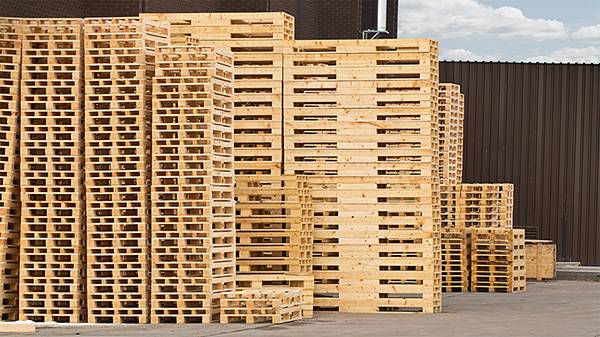
What Is a Skid?
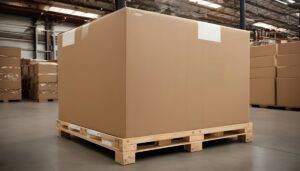
A skid is a single-deck platform that rests on runners instead of a bottom deck. It supports heavy or oversized loads during shipping and storage. Unlike a pallet, it has no deck boards underneath.
This guide explains what a skid actually is, how it differs from a pallet, and when to use one instead. We’ll also cover how Ficus Pax custom-engineers skids for heavy industrial equipment.
Skid Meaning: The Basics
A skid is essentially a platform built on runners, also called stringers. These runners lift the load off the ground, similar to a sled. Unlike a pallet, there’s no bottom deck connecting the runners underneath.
Because of this simpler structure, a skid concentrates weight differently than a pallet. It suits heavy, static loads better than repeated handling. As a result, skids are often the first choice for oversized industrial equipment.
Skid vs Pallet: What’s the Real Difference?
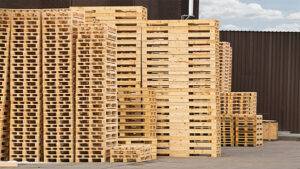
People often use “skid” and “pallet” interchangeably. In fact, the skid came first, predating the double-deck pallet design. However, the two serve different purposes today.
A pallet has both a top and bottom deck, which distributes weight more evenly. This makes it better suited for repeated forklift handling and warehouse stacking. A skid, on the other hand, works best for one-directional moves and heavy static loads.
For a deeper side-by-side comparison, see our dedicated guide on skids vs pallets, which covers stacking, cost, and load capacity in more detail.
When Should You Use a Skid Instead of a Pallet?
- Your equipment is heavy, oversized, or irregularly shaped
- The load moves once or twice, rather than being repeatedly handled
- Your product needs a custom-built base rather than a standard size
- The equipment stays bolted to its base during storage or deployment
- You need a lower-cost option than a fully decked pallet.
Therefore, if your shipment matches several of these, a skid likely makes more sense than a standard pallet.
What Materials Are Skids Made From?
Wood remains the most common skid material, since it’s cost-effective and easy to customize on short notice. Plywood skids offer a smoother, more uniform surface for delicate equipment. Steel and plastic skids show up too, mainly for repeated-use applications or extreme environments.
How Ficus Pax Custom-Engineers Skids for Industrial Equipment
At Ficus Pax, we design heavy-duty skids from a variety of high-quality materials to withstand the weight and forces of industrial products. Our engineers use simulation software to predict the stresses your equipment may face during handling and transport.
Beyond the base structure itself, we often add blocking material to immobilize the load during transit. Depending on the product, this might include corrugated foam, air pads, or bubble wrap. We also apply corrosion protection for metal components when needed.
Are Skids Suitable for Export Shipments?
Yes, when built correctly. Heat-treated wooden skids can meet ISPM-15 requirements for international shipping. This matters because untreated wood risks rejection at customs in many countries.
Additionally, export-ready skids often pair with crate or box packaging for extra protection. Ficus Pax builds custom crates alongside skids, so your equipment gets a complete, compliant shipping solution rather than a base alone.
FAQ:
What is a skid in shipping?
A skid is a single-deck platform on runners. It supports heavy or oversized loads during shipping and storage. Unlike a pallet, it has no bottom deck.
Is a skid the same as a pallet?
Not quite. A skid has no bottom deck and suits heavy, static, one-directional loads, while a pallet has both top and bottom decks for repeated handling.
When should I use a skid instead of a pallet?
Use a skid for heavy, oversized, or irregularly shaped equipment. This works best when the load won’t be repeatedly handled. A custom-built base often fits the product better than a standard pallet.
Can skids be used for international export?
Yes. Heat-treated wooden skids can meet ISPM-15 requirements for export, provided they’re built and treated to the correct standard.
Does Ficus Pax build custom skids?
Yes. Ficus Pax engineers custom skids for heavy industrial equipment, using simulation software to match the design to your product’s exact weight and handling needs.
Get in Touch with Ficus Pax
ISO 9001:2015 Certified | Established 1999 | Part of UFP Industries, Inc. (USA)
 +91 6366961615

 Bangalore