

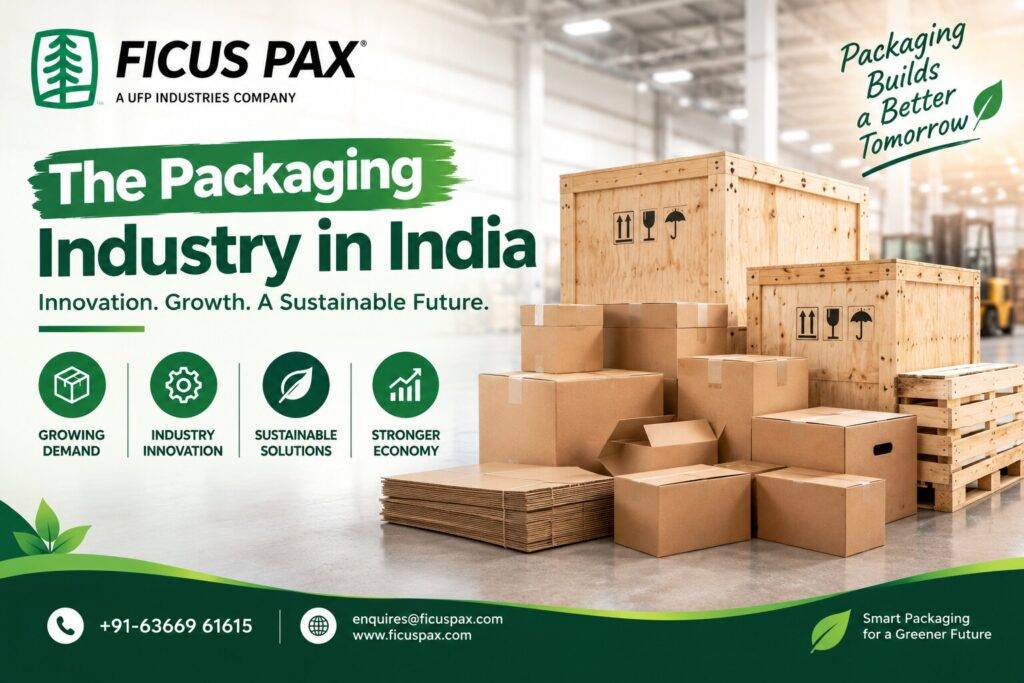
The Packaging Industry in India: Market Size, Growth & Key Trends (2026)
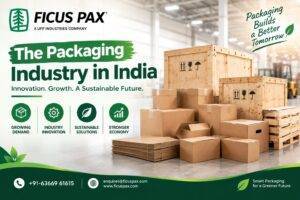
India’s packaging industry has quietly become one of the country’s fastest-growing manufacturing sectors — not through one big headline, but through steady demand from e-commerce, FMCG, pharma, and export manufacturing all pulling on it at once. For businesses sourcing packaging, understanding where the industry is headed matters as much as finding a vendor for today’s order.
This overview covers the size of the market, what’s driving its growth, the segments doing the heavy lifting, and the shifts — regulatory and otherwise — that are already changing what “good packaging” means in India.
How Big Is India’s Packaging Industry Right Now
India’s packaging sector is already the country’s fifth-largest industry, and the growth rate is the real story: Invest India places the sector’s historical growth at 22–25% CAGR, well ahead of the global packaging market’s roughly 2.8% (Invest India). Separately, Avendus Capital projects the industry reaching USD 92 billion by FY30 at close to 9% CAGR going forward (Avendus Capital) — the gap between the two numbers is mostly about timeframe and methodology, but both point the same direction.
Per-capita packaging consumption roughly doubled over the past decade, moving from 4.3 kg to 8.6 kg annually by FY20 (Invest India). That’s still well below developed-market consumption levels, which is usually read as more room to grow rather than a market maturing out.
What’s Actually Driving the Growth
E-commerce and D2C volume — every shipped order needs a box, and bulk/export shipping needs a box engineered for it, not a retail carton stretched past its limits.
FMCG and food safety standards — rising consumer expectations around hygiene and shelf life push brands toward better-engineered, better-sealed packaging.
Pharma and export compliance — regulated industries need packaging that meets specific handling, labeling, and certification requirements, not generic cartons.
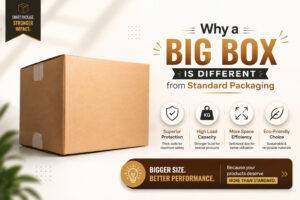
Manufacturing and industrial growth — heavier, bulkier industrial goods need packaging engineered around weight and fragility, which is where corrugated and wood-based solutions take over from standard cartons.
Disposable income and changing consumption habits sit underneath all of this (Invest India), but the practical driver for most B2B buyers is simpler: as operations scale, generic packaging stops working and custom-engineered packaging becomes the cheaper option — fewer damaged shipments, fewer returns, less wasted material.
The Segments Carrying the Industry
Packaging in India isn’t one market — it’s several, moving at different speeds.
Corrugated and paper-based packaging is gaining share specifically because it’s recyclable and increasingly favored over polymer-based alternatives like EPS foam as both regulation and buyer preference shift.
Flexible packaging (pouches, wraps) continues to dominate FMCG and food, where minimizing material and shipping volume matters more than rigidity.
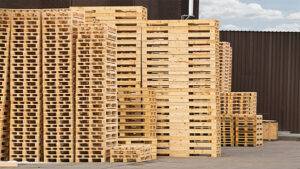
Rigid and wood-based packaging — crates, pallets, plywood and honeycomb boxes — covers the heavy-industrial and export side: machinery, automotive parts, aerospace components, anything that can’t risk crushing in transit.
Sustainable/bio-based packaging is the smallest segment today but the fastest-growing, pushed by both regulation and brand pressure.
The Regulatory Shift Nobody’s Ignoring Anymore
The single-use plastic ban and the broader Extended Producer Responsibility (EPR) framework have done more to reshape packaging specs in the last few years than any single technology trend. Government policy is also pushing to cut polyethylene imports — currently around 1.7 MTPA — and redirect domestic feedstock elsewhere (Invest India), which indirectly keeps pushing demand toward paper, corrugated, and wood-based alternatives.
For businesses choosing a packaging partner today, this isn’t a future consideration — export buyers in particular are already asking for recyclability and certification documentation as standard, not as an upsell.
Where the Industry Clusters
Packaging manufacturing in India isn’t evenly spread — it clusters around industrial and export corridors: the NCR belt, Mumbai-Pune, Gujarat’s manufacturing hubs, and South India’s industrial centers around Chennai and Bangalore. Bangalore in particular has grown into a serious packaging hub off the back of the city’s electronics, automotive-component, aerospace, and export manufacturing base — industries that all need packaging engineered to spec, not off-the-shelf.
Where Ficus Pax Fits Into This
Ficus Pax has operated in this space since 1999, and is ISO 9001:2015 certified. The business has been majority-owned by UFP Industries since 2021, and currently serves 450+ clients out of its Bangalore base — positioned specifically in the corrugated, plywood, and wood-based packaging segments that are gaining share as the industry moves away from polymer-heavy formats.
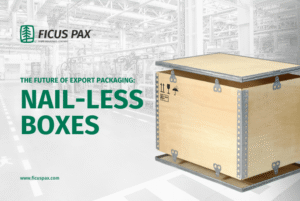
If you’re sourcing packaging for industrial, export, or heavy-goods shipments and want it engineered to the product rather than picked off a size chart, get in touch with our team — or browse what we build across nail-less plywood boxes, ISPM-15 certified wooden pallets, and our wider product range.
FAQ:
How big is the packaging industry in India?
Estimates vary by source and methodology, but Invest India places the sector’s historical growth at 22–25% CAGR, and Avendus Capital projects the market reaching roughly USD 92 billion by FY30 at close to 9% CAGR from here. Both point to sustained, above-global-average growth.
What’s driving packaging industry growth in India?
E-commerce and D2C shipping volume, FMCG and food-safety standards, pharma export compliance, and broader industrial manufacturing growth are the main drivers — alongside rising disposable income and per-capita consumption that’s still well below developed-market levels.
Which packaging segment is growing fastest in India?
Sustainable and bio-based packaging is growing fastest off a small base, pushed by the single-use plastic ban and Extended Producer Responsibility rules. Corrugated and paper-based packaging is also steadily gaining share over polymer-based alternatives like EPS foam.
Is Bangalore a major packaging manufacturing hub?
Yes — Bangalore’s concentration of electronics, automotive-component, aerospace, and export manufacturing has made it one of South India’s key packaging hubs, particularly for custom-engineered corrugated and wood-based packaging rather than generic retail cartons.
Certified packaging solutions provider in India — custom corrugated boxes, plywood boxes, wooden pallets, and heavy-duty industrial packaging.
 +91 6366961615
 ficuspax.com
 info@ficuspax.com
 Bangalore
ISO 9001:2015 Certified | Established 1999 | Part of UFP Industries, Inc. (USA)