

Honeycomb Packaging: The Complete Guide to Sustainable Protective Packaging
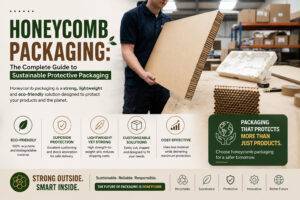
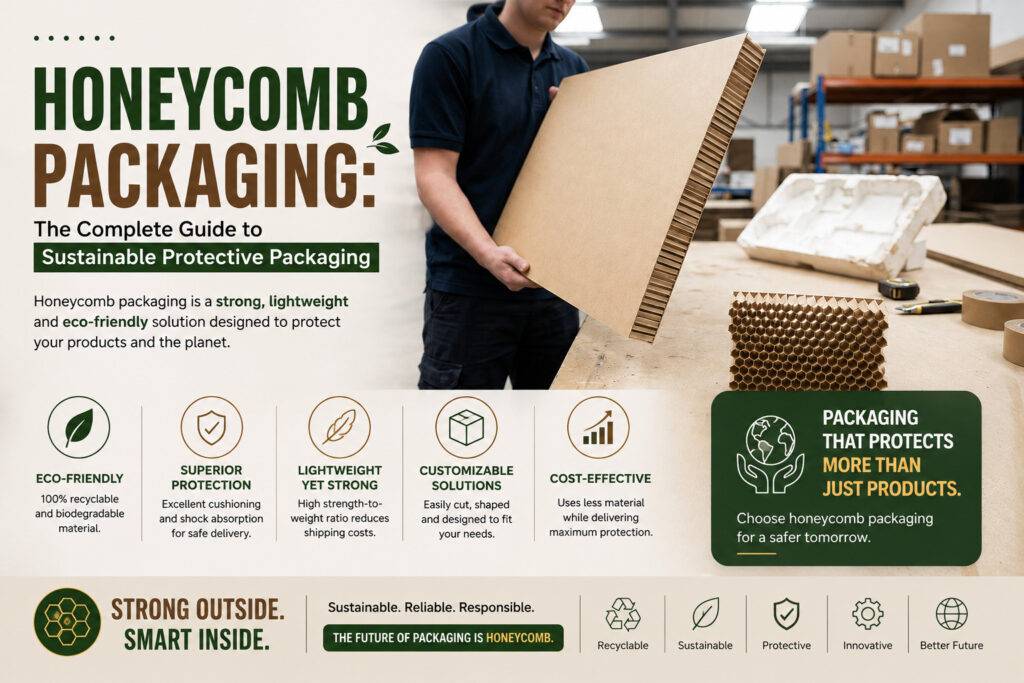
Honeycomb packaging is a paper-based protective packaging material built from a layered, hexagonal cell structure that expands like an accordion to cushion, wrap, and fill void space during shipping. It replaces plastic bubble wrap, foam, and air pillows with a fully recyclable, plastic-free alternative that still delivers strong impact and vibration protection.
For e-commerce businesses, manufacturers, and logistics teams under pressure to cut plastic use without sacrificing product protection, it has become one of the most practical Sustainable Packaging Solutions available today.
Key Takeaways
- It is made from recycled kraft paper folded into hexagonal cells that expand to cushion, wrap, or fill space.
- It is 100% recyclable, biodegradable, and free of plastic, making it a strong eco-friendly packaging choice.
- It performs especially well for heavy, dense, or irregularly shaped products where bubble wrap and foam fall short.
- Honeycomb paper comes in wrap, sheet, cushion, and roll formats for different packing applications.
- Businesses switching from plastic packaging often reduce material costs, storage space, and carbon footprint at the same time.
What is Honeycomb Packaging?
Honeycomb packaging is a protective packaging material made from layers of kraft paper that are glued in a pattern and then stretched open into a network of hexagonal cells, similar to a real beehive.This cellular structure is what gives the material its strength. Each hexagon distributes pressure evenly across the surface, so the paper can absorb shocks and vibrations without collapsing under weight.
How Does Honeycomb Packaging Work?
It works through structural engineering, not just material choice. The hexagonal cell pattern is the same shape engineers use in aerospace panels and cardboard cores because it offers the best strength-to-weight ratio of any repeating shape.
The Expansion Process
Honeycomb paper ships and stores flat, in compact rolls or sheets. When a warehouse or fulfillment team needs it, they simply pull the paper apart by hand or feed it through a dispenser. The glued strips separate and lock into thousands of open hexagonal cells within seconds.
Shock Absorption
Once expanded, each cell acts like a tiny air cushion made of paper. When an impact hits the package, the cells compress and flex instead of transferring that force directly to the product inside. This is what allows packaging to protect heavy or dense items that would crush foam or puncture bubble wrap.
Benefits of Honeycomb Packaging
Honeycomb packaging offers a combination of protection, sustainability, and operational savings that few packaging materials can match at once.
- Strong cushioning: Handles heavy, dense, and irregularly shaped products better than standard bubble wrap.
- Plastic-free packaging: Made entirely from paper, with no plastic film, foam, or mixed materials.
- Fully recyclable and biodegradable: Goes into standard paper recycling and breaks down naturally.
- Space-efficient storage: Ships and stores flat, then expands only when needed, freeing up warehouse space.
Types of Honeycomb Packaging
Honeycomb Paper Wrap
A flat roll of paper that expands into a cushioned wrap. It is commonly used to protect individual products such as glassware, electronics, and industrial parts before boxing.
Honeycomb Paper Sheets
Pre-cut, expanded sheets used as layer pads, dividers, or slip sheets between stacked products, particularly in manufacturing and pallet packing.
Honeycomb Cushion Pads
Thicker, pre-formed pads designed for corner and edge protection on heavier items such as appliances, furniture, and machinery components.
Common Applications and Industries
Honeycomb packaging is used across a wide range of industries, wherever businesses need reliable protection without relying on plastic.
- E-commerce and direct-to-consumer brands: Protective wrap and void fill for fragile, heavy, or high-value shipments.
- Manufacturing and industrial goods: Cushioning for machine parts, tools, and metal components during transit.
- Electronics and appliances: Corner and edge protection for items sensitive to impact and vibration.
- Furniture and glassware: Wrap and layer pads that prevent scratching, chipping, and breakage.
Why It Is a Sustainable Packaging Solution
First, it is typically made from recycled Kraft Paper, so it uses fewer virgin resources than plastic-based cushioning. Second, because it recycles alongside cardboard and paper waste, businesses do not need separate collection streams the way they do for plastic film.
Together, these factors make honeycomb packaging one of the more complete Sustainable Packaging Solutions available to e-commerce and logistics businesses today, addressing raw material sourcing, end-of-life disposal, and transport emissions at once.
How to Choose the Right Honeycomb Packaging
The right honeycomb packaging format depends on what you ship, how it moves through your warehouse, and your budget.
- Product weight and density: Heavier items need thicker cushion pads or multi-layer wrap, not thin void-fill rolls.
- Fragility level: Glass, electronics, and ceramics benefit from dedicated wrap plus corner pads, not void fill alone.
- Packing speed: High-volume fulfilment centres often prefer dispenser-fed rolls that expand quickly at the packing station.
FAQ:
Is honeycomb packaging recyclable?
Yes. Honeycomb packaging is made from paper, so it recycles alongside standard cardboard and paper waste. It does not require separate plastic-film recycling.
Is honeycomb packaging as protective as bubble wrap?
For heavy, dense, or irregularly shaped items, honeycomb packaging often protects better than bubble wrap, since its cell structure resists crushing.
What is honeycomb packaging made from?
It is made primarily from recycled kraft paper, folded and glued into a hexagonal cell pattern that expands on demand.
Can honeycomb packaging replace all plastic packaging in a warehouse?
In most cases, honeycomb packaging can replace bubble wrap, foam corner protectors, and plastic void-fill air pillows. Some specialty applications, such as moisture barriers.
Does honeycomb packaging cost more than plastic packaging?
Upfront per-roll pricing can be similar to or slightly higher than plastic. However, many businesses see lower total costs once they factor in reduced storage space.
Final Thoughts
Honeycomb Packaging gives e-commerce businesses, manufacturers, and logistics teams a way to protect products without relying on plastic. It combines strong cushioning, low storage footprint, and full recyclability in a single material, which is why more brands are switching away from bubble wrap and foam