

Skids vs Pallets: What’s the Difference and Which One Do You Need?
Skids vs pallets is a common question in shipping and industrial packaging. Although the two are often used interchangeably, they have important differences in design, handling, cost, and storage. A skid typically has a top deck supported by runners, while a pallet is designed for repeated handling, stacking, and storage. In this guide, we’ll explain the key differences and help you choose the right option for your shipment.
What Is a Skid?
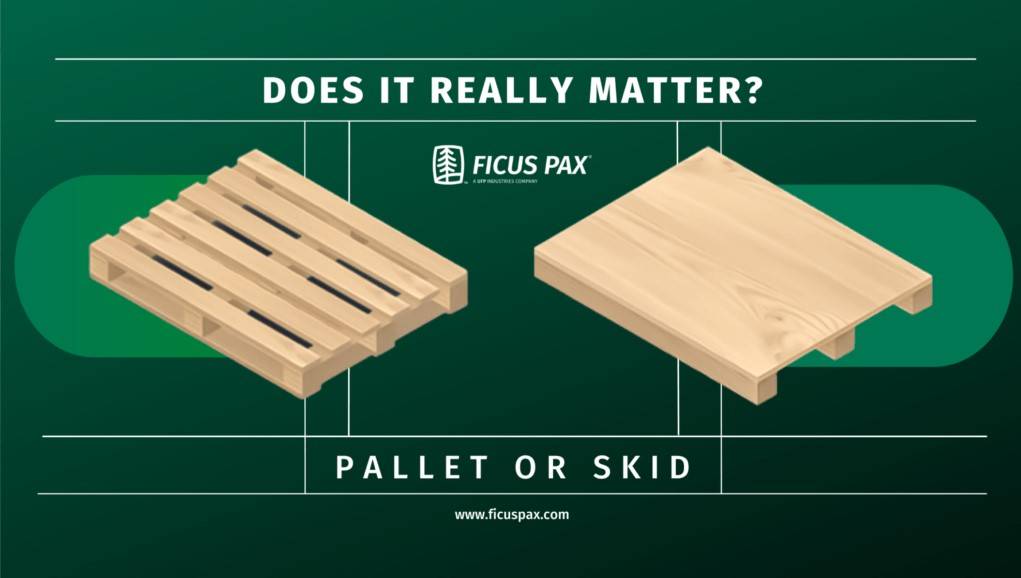
A skid is essentially the stripped-down cousin of a pallet. It has a top deck (the flat surface your load sits on) supported by runners or legs, but no bottom deck boards. That missing bottom deck is the whole point — it gives you ground clearance for a forklift or pallet jack without adding the extra material, weight, or cost of a second deck.
Skids are the go-to choice in industrial and manufacturing settings for heavy, awkwardly shaped, or oversized loads — think machinery bases, engine blocks, or large metal fabrications that need to be lifted and moved a handful of times, not stacked in a warehouse rack for months.
What Is a Pallet?
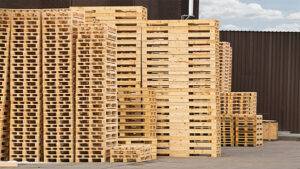
A pallet is built for the opposite job: repeated handling, stacking, and storage. With decking on both the top and bottom, a pallet distributes weight more evenly and can be stacked safely, which is why pallets dominate warehousing, retail distribution, and any shipment that’s going to sit in a rack or get double-stacked in a container.
Skid vs Pallet: Key Differences
Factor | Skid | Pallet |
Structure | Top deck + runners, no bottom deck | Top and bottom deck, fully enclosed |
Stackability | Not designed for stacking | Built for stacking and racking |
Weight | Lighter (less material) | Heavier (more material) |
Best for | Heavy machinery, one-time or low-frequency moves | Repeated handling, warehousing, retail distribution |
Cost | Generally lower (less timber) | Generally higher |
Ground clearance | Yes, via runners | Yes, via bottom deck blocks/boards |
Export compliance | Subject to ISPM 15 if solid wood | Subject to ISPM 15 if solid wood |
When to Choose a Skid Over a Pallet
Go with a skid when:
- You’re shipping heavy machinery, tooling, or equipment that won’t be stacked
- The load will be lifted by forklift or crane a limited number of times, not repeatedly racked
- You want to reduce material cost and shipping weight without compromising load support
- The item’s own base is rigid enough that it doesn’t need a bottom deck for protection
When to Choose a Pallet Over a Skid
Go with a pallet when:
- Goods need to be stacked in a warehouse, container, or retail environment
- You’re shipping smaller, boxed, or palletized goods that benefit from a full, even support surface
- The shipment will pass through multiple handling points (distribution centers, cross-docking) where standardized pallet handling equipment is expected
- You need the added structural protection a bottom deck provides during multi-leg transit
A Note on Export Compliance (ISPM 15)
Whether you choose a skid or a pallet, if it’s made from solid wood and you’re shipping internationally, it needs to comply with ISPM 15 — the international standard requiring wood packaging material to be heat-treated or fumigated and stamped with the IPPC mark. This applies equally to skids and pallets; the wrong assumption that only pallets need certification is a common (and costly) mistake that can get a shipment rejected at customs.
Custom Skids and Pallets from Ficus Pax
At Ficus Pax, we manufacture both to spec — solid wood, custom dimensions, and ISPM 15-compliant for export. If your load is heavy machinery or components that need ground clearance without the extra cost of a full deck, our wooden pallets team (ficuspax.com/wooden-pallet-manufacturer/) can also build you a custom skid to match. For lighter loads where you want a stackable, eco-friendly option, take a look at our honeycomb pallets (ficuspax.com/honeycomb-pallets-paper-pallets/) as well.
Not sure which one fits your shipment? Get in touch (ficuspax.com/contact/) and we’ll help you spec it out.
FAQ:
Is a skid the same as a pallet?
No. A skid has only a top deck supported by runners, with no bottom deck. A pallet has both a top and bottom deck, skids vs pallets which makes it suitable for stacking.
Can a skid be used for export shipping?
Yes, as long as it’s ISPM 15 compliant if made from solid wood — the same requirement that applies to pallets.
Which is cheaper, a skid or a pallet?
Skids are generally less expensive since they use less timber, skids vs pallets with no bottom deck to build.
Can I stack goods on a skid?
Skids aren’t designed for stacking the way pallets are, since they lack the bottom deck that distributes weight for safe stacking. If stacking is part of your process, a pallet is the better choice.
Partner with Ficus Pax
At Ficus Pax, we focus on delivering safe, reliable, and Cost-Effective. Our packaging ensures that your components and vehicles reach their destination safely and efficiently.
 Contact us today to design the right for your business.