

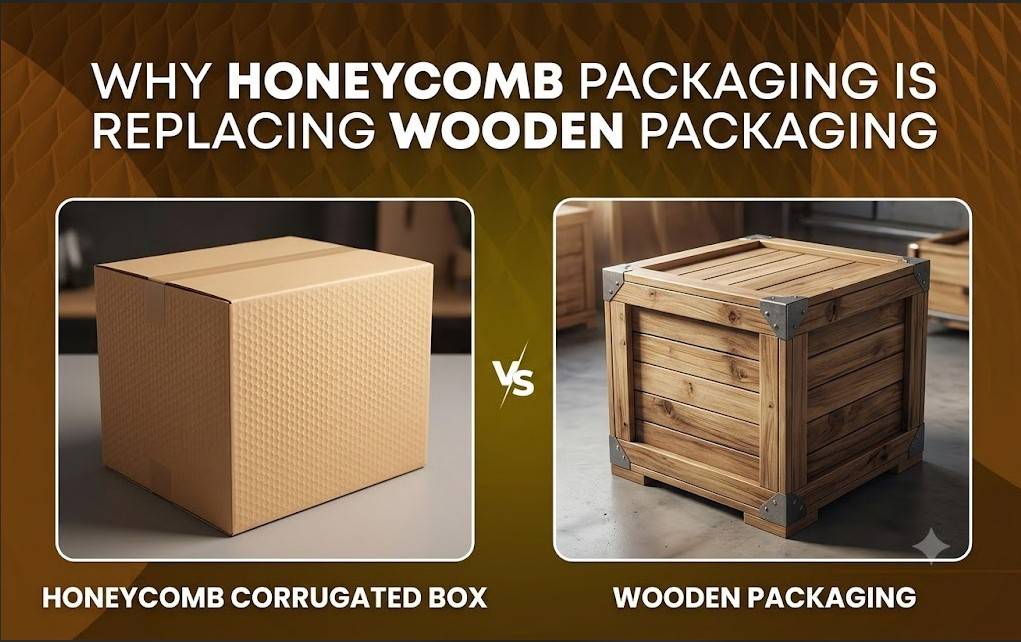
Honeycomb Packaging VS Wooden Packaging
Honeycomb packaging is changing the way industries protect and ship their products. As a result, more businesses now choose this lightweight, paper-based alternative over traditional wooden crates. Because of this shift, engineers, exporters, and sustainability teams increasingly turn to honeycomb packaging for everything from machinery to furniture.
What Is Honeycomb Packaging?
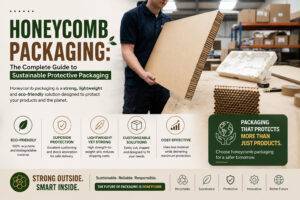
Manufacturers build by folding layers of paper into a hexagonal, bee-hive-like structure. They then sandwich this core between flat paperboard sheets.
This design spreads weight evenly across the panel, so it creates a rigid structure without adding bulk. In fact, aircraft engineers use a similar honeycomb core inside wings for the same reason: maximum strength, minimum weight. Unlike wood, manufacturers make from renewable paper fibers, so it stays fully recyclable.
Why Wooden Packaging Is Losing Ground
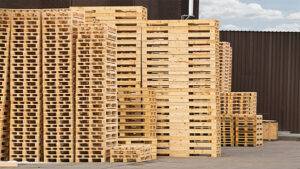
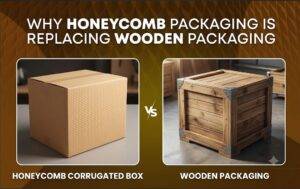
Wooden packaging served industries well for decades. However, it comes with real drawbacks. First, it weighs a lot, which drives up freight costs. Second, wood splinters easily and absorbs moisture, so it often needs pest treatment or fumigation certificates before international shipping. Meanwhile, sourcing wood contributes to deforestation, and disposing of it isn’t always simple. Consequently.
How Corrugated Honeycomb Board Is Built
Corrugated honeycomb board combines two proven ideas: the cushioning of corrugated cardboard and the load-bearing strength of a honeycomb core. Small air pockets inside the hexagonal cells absorb shock and pressure, so they protect goods during transit while keeping the material light.
Honeycomb Packaging vs Wooden Crates: Strength Test
Many people assume wood automatically beats paper on strength. In reality, honeycomb packaging often matches or even exceeds the compressive strength of wood, pound for pound.
Because the hexagonal cells distribute load evenly, honeycomb panels handle stacking pressure well, a critical factor when warehouses stack crates several levels high.
Cost Savings Industrial Packaging Materials Deliver
Weight equals money in logistics. Since, Honeycomb packaging weighs significantly less than an equivalent wooden crate, it directly cuts freight and handling costs. Moreover, workers assemble honeycomb panels faster than wood, which reduces labor time. Therefore, businesses that source their packaging supplies in bulk see these savings add up quickly across every shipment.
Sustainability Gains from Honeycomb Packing Paper
Honeycomb packing paper breaks down naturally, and manufacturers typically make it from recycled or responsibly sourced pulp. It also removes the need for chemical wood treatments or fumigation, so it creates a cleaner process for both the environment and the workers who handle it. For brands chasing ESG targets, switching to honeycomb packaging offers a visible, measurable way to shrink their carbon footprint.
Why Companies Choose Sustainable Packaging Materials
Beyond cost and strength, customer expectations and regulatory pressure are pushing companies toward Sustainable Packaging materials. Many export markets now favor, or even require, packaging that meets environmental standards. Consequently, companies that switch early position themselves ahead of stricter regulations while also appealing to environmentally conscious buyers.
Honeycomb Packaging Across Containers and Packaging Industries
Honeycomb packaging isn’t limited to one sector. Instead, furniture makers, automotive suppliers, electronics brands, and glass and ceramics exporters all rely on it. Additionally, many warehouses use honeycomb panels for palletization. Wherever containers and packaging need to balance protection with weight efficiency, Honeycomb solutions can replace wood almost entirely.
Finding Packaging Supplies Near
When you search for packaging supplies near me, prioritize suppliers who offer sample testing, custom sizing, and bulk pricing. Local sourcing also shortens lead times and cuts transportation emissions, which adds another sustainability win when you pair it with Honeycomb materials.
Picking the Right Industrial Packaging Supplies Partner
Not every vendor of industrial packaging supplies delivers the same quality of honeycomb board. Therefore, look for a partner who provides strength and load-testing data, offers both corrugated honeycomb board and finished packing paper, and has experience packaging goods similar to yours, whether that’s fragile electronics or heavy export machinery.
FAQ’s
1. What is honeycomb packaging made of?
Manufacturers make it from paper, folded into a hexagonal core and sandwiched between flat paperboard or kraft sheets.
2. Is honeycomb packaging as strong as wood?
Yes, in most cases. Its hexagonal design spreads weight evenly, so it often matches or exceeds wood’s strength relative to weight.
3. How much does honeycomb packaging cost compared to wooden crates?
It generally costs less, since it weighs less, ships cheaper, and assembles faster, though exact savings depend on volume and design.
4. Is honeycomb packaging recyclable?
Yes. Because manufacturers make it from paper, it stays fully recyclable and biodegradable.
5. Are there government subsidies for switching to eco-packaging?
In several regions, yes, including MSME green manufacturing schemes in India and packaging incentives under EU environmental regulations. Eligibility varies, so check with local authorities.