

Pallet or Skid: Which One Does Your Shipment Actually Need?
For the uninitiated, packaging options can all look the same. There are, however, real differences between types of packaging material, and understanding skid vs pallets — or pallets vs skid, however you search it — can affect both product protection and your costs. When it comes to wooden packaging, the question of pallet or skid comes up constantly. Skid pallets function differently, get used differently, and each suits different applications better.
What Is Skid and Skids? The Basics
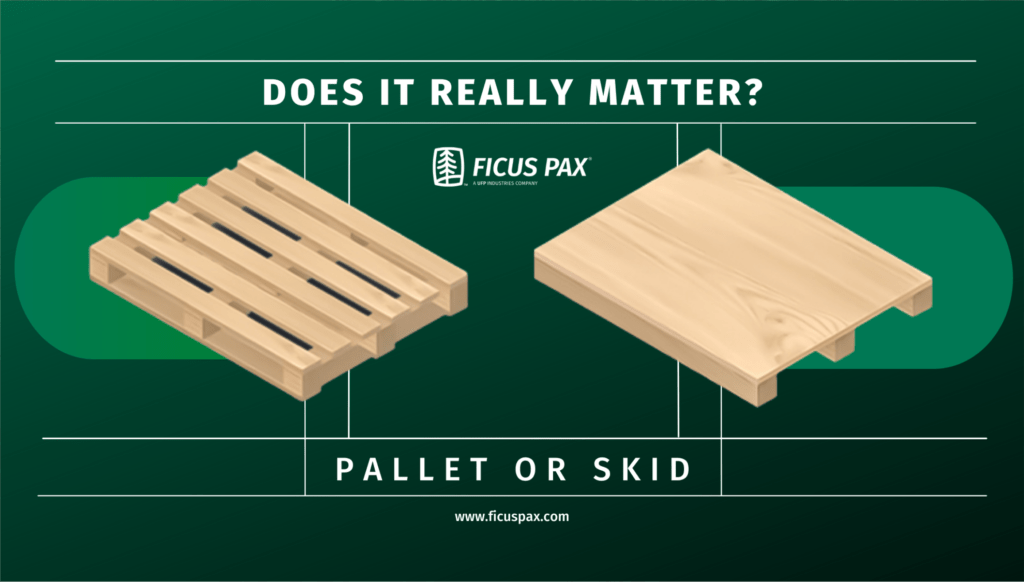
So what is skid and skids, exactly? A skid is a single-deck platform that sits on runners instead of a full base. Unlike a pallet, it has no bottom deck connecting those runners underneath. For a deeper breakdown of skid packaging on its own, see our complete guide to skids.
What Is a Pallet?
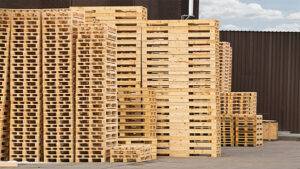
Wood pallets get classified as stringers or blocks. They also split into two-way, four-way, and partial four-way types, depending on how many directions a pallet truck or forklift can lift them from. Pallets can be reversible or non-reversible too, depending on whether both the top and bottom work as the load-bearing deck. Sizes vary by region — North America’s standard 48×40 inch pallet is larger than typical European sizes — though Ficus Pax customizes pallets to your exact requirements.
Advantages of pallets:
- Extremely stable under palletized loads
- Handle a wide variety of weights and sizes with the right design
- Easy for a forklift to load and unload
- Easy for a pallet jack to move
- Well suited to repeated handling and warehouse stacking
Skid Packaging and Skid Package Options: How They Differ
Skids can be built from wood, plastic, or paper. They’re sometimes called single-deck pallets or nestable pallets. Because they’re nestable, every skid package offers empty-stack efficiency that standard pallets don’t — better cube efficiency and less storage space used. Lower transport and storage costs make skid packing more cost-effective for the right application. The trade-off: skids can be incompatible with certain conveyors and racking systems built specifically for palletized loads.
Advantages of skids:
- Work as a permanent foundation for heavy equipment
- Make heavy items mobile, since they can be pulled or pushed
- Keep heavy machinery off the ground
- Use less material than a fully decked pallet
Skid vs Pallets, or Pallets vs Skid: The Real Difference
With pallets, the bottom deck absorbs torque and stabilizes the load. A skid can fail under that same stress, since the lack of a bottom deck makes it less stable overall. That said, skids have their purpose — they’re an ideal foundation for heavy machinery, working well for initial transport and then as a permanent base that keeps the product off the ground. They can still be moved later when needed.
The skid and pallets differences really come down to how many times the load gets handled. Skids suit equipment moved once and then left in place; pallets suit goods moving repeatedly through a warehouse or supply chain.
Which Should You Choose?
Choose a pallet if:
- Your product will be handled repeatedly by forklifts
- You need warehouse stacking and racking compatibility
- Weight distribution across the full base matters
Choose a skid if:
- Your equipment moves once, then stays in place
- You want to save on material and cost
- The product is heavy, oversized, or irregularly shaped
Contact us to talk through pallets or skids for your specific product packaging requirements.
FAQ
What is skid and skids in packaging?
A skid is a single-deck platform on runners, used to support heavy loads without the bottom deck a pallet has.
What’s the skid and pallets differences?
A pallet has a top and bottom deck for repeated handling; a skid has no bottom deck and suits heavy, one-time-move loads better.
Are skid pallets the same as regular pallets?
Not quite — “skid pallet” usually refers to the single-deck skid style, not a standard double-deck pallet.
When should I use skid packaging or a skid package instead of a pallet?
Use skid packing when equipment moves once and stays in place, or when you want to save on material for a heavy, one-way shipment.
 +91 6366961615
 ficuspax.com
 info@ficuspax.com
 Bangalore
ISO 9001:2015 Certified | Established 1999 | Part of UFP Industries, Inc. (USA)